
Where Are GFCI Outlets Required? A Homeowner's Guide for Oregon Homes
Learn where GFCI outlets are required in Oregon homes, why they're important, and when to upgrade. Get expert electrical safety tips from HighLine Electric.
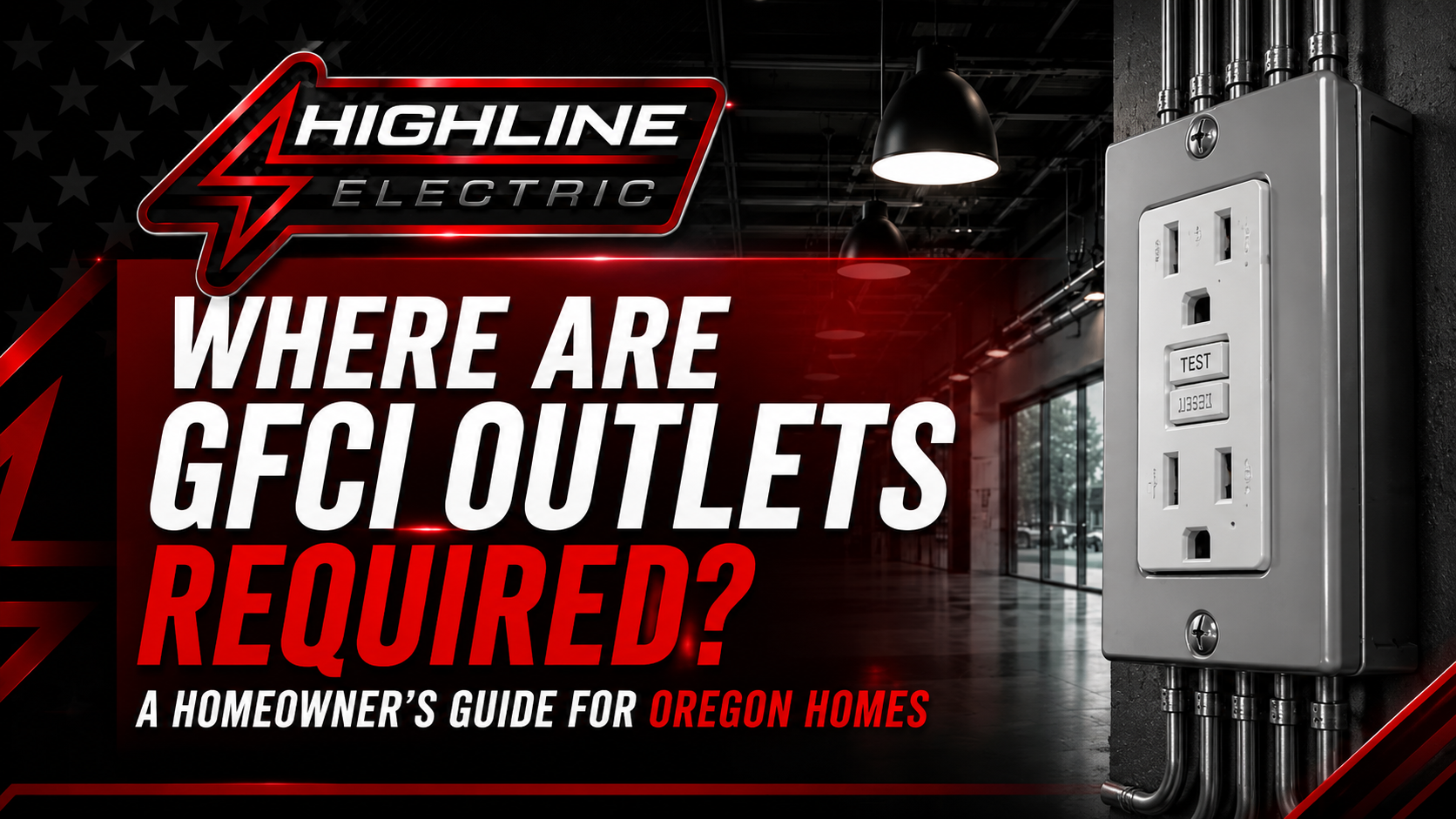
Electrical safety starts with having the right protection in the right places. One of the most important safety devices found in modern homes is the Ground Fault Circuit Interrupter (GFCI) outlet. These specialized outlets are designed to reduce the risk of electrical shock by quickly shutting off power when they detect a ground fault.
Whether you're remodeling your kitchen, updating an older home, or installing new electrical outlets, understanding where GFCI outlets are required can help keep your family safe and ensure your home's electrical system meets current code requirements.
In this guide, we'll explain what GFCI outlets are, where they're typically required, and when it's time to upgrade.
What Is a GFCI Outlet?
A Ground Fault Circuit Interrupter (GFCI) outlet is a safety device that monitors the flow of electricity through a circuit. If it detects an imbalance—such as electricity flowing through water or a person instead of the intended circuit—it immediately cuts power, often in a fraction of a second.
Unlike a standard electrical outlet, a GFCI outlet is designed specifically to protect people from electrical shock. They're easy to identify by the "Test" and "Reset" buttons located on the face of the outlet.
Why Are GFCI Outlets Important?
Water and electricity create a dangerous combination. That's why GFCI outlets are required in locations where moisture is more likely to be present.
Installing GFCI outlets helps:
- Protect against electrical shock
- Reduce the risk of electrical injuries
- Improve household electrical safety
- Meet current National Electrical Code (NEC) requirements
- Protect family members in high-risk areas
For homeowners, upgrading older outlets to GFCI protection is one of the simplest ways to improve electrical safety throughout the home.
Where Are GFCI Outlets Required?
Current electrical codes require GFCI protection in several areas of the home where moisture or damp conditions increase the risk of electrical hazards.
Common locations include:
Kitchens
Any outlet serving countertop spaces should have GFCI protection to help prevent shock when using small appliances near sinks.
Bathrooms
Bathroom outlets must be protected because of their close proximity to sinks, showers, and tubs.
Garages
Garage outlets are exposed to moisture, concrete floors, and power tools, making GFCI protection essential.
Laundry Rooms
Washing machines, utility sinks, and damp conditions make laundry areas another location requiring GFCI outlets.
Outdoor Areas
Patios, decks, porches, and exterior walls should all have weather-resistant GFCI outlets designed for outdoor use.
Basements & Crawl Spaces
Unfinished basements and crawl spaces often contain moisture, making GFCI protection necessary for added safety.
Utility Rooms
Any area with utility sinks or similar water sources should include GFCI protection.
Does Every Outlet Need to Be GFCI Protected?
No. While GFCI outlets are required in many areas of the home, they're not necessary for every outlet.
Living rooms, bedrooms, dining rooms, and most hallways typically use standard outlets unless special circumstances apply. A licensed electrician can determine which outlets require GFCI protection based on your home's layout and the latest electrical code requirements.
Signs It's Time to Upgrade to GFCI Outlets
Many older homes still have standard outlets installed in areas that would now require GFCI protection.
You may want to upgrade if:
- Your home has two-prong outlets
- Kitchen or bathroom outlets don't have Test and Reset buttons
- You're remodeling your kitchen or bathroom
- You're replacing damaged outlets
- Outdoor outlets lack weather-resistant protection
- Your home was built before modern GFCI requirements were adopted
Upgrading these outlets improves both safety and code compliance.
Can I Install a GFCI Outlet Myself?
While replacing an outlet may seem like a straightforward DIY project, GFCI outlets must be wired correctly to function as intended.
Improper installation can result in:
- Outlets that don't provide protection
- Nuisance tripping
- Shock hazards
- Code violations
- Damage to connected devices
A licensed electrician can verify the circuit, install the outlet correctly, and test the device to ensure it's operating safely.
GFCI Outlet Installation vs. GFCI Circuit Breakers
Both GFCI outlets and GFCI circuit breakers provide ground fault protection, but they work differently.
A GFCI outlet protects that outlet and, in some cases, additional downstream outlets on the same circuit when wired correctly.
A GFCI circuit breaker protects the entire electrical circuit directly from the electrical panel.
The best solution depends on your home's wiring and the specific areas that require protection. A licensed electrician can recommend the most effective option for your electrical system.
Frequently Asked Questions
How do I know if I already have GFCI outlets?
Look for outlets with "Test" and "Reset" buttons on the front. These indicate that the outlet provides GFCI protection.
Why does my GFCI outlet keep tripping?
Frequent tripping may indicate moisture, a faulty appliance, damaged wiring, or an overloaded circuit. If the outlet continues to trip after resetting, it should be inspected by a licensed electrician.
Can I replace a standard outlet with a GFCI outlet?
In many cases, yes. However, the wiring and circuit configuration should be inspected to ensure the outlet is installed correctly and functions properly.
How long do GFCI outlets last?
Most GFCI outlets have a lifespan of approximately 10 years, though they should be replaced sooner if they fail testing, become damaged, or no longer reset properly.
Protect Your Home with Professional GFCI Outlet Installation
GFCI outlets are one of the most effective ways to improve electrical safety in your home. Whether you're replacing outdated outlets, remodeling a kitchen or bathroom, or bringing an older home up to current code standards, installing GFCI protection helps safeguard your family and your electrical system.
If you're unsure whether your home has the proper GFCI protection, HighLine Electric is here to help. Our licensed electricians provide professional GFCI outlet installation, outlet replacements, and electrical safety upgrades for homeowners throughout Woodburn, OR, and the surrounding communities.
Need to install or upgrade GFCI outlets? Contact HighLine Electric today to schedule an inspection or learn more about our Outlet & Switch Installation services.
